

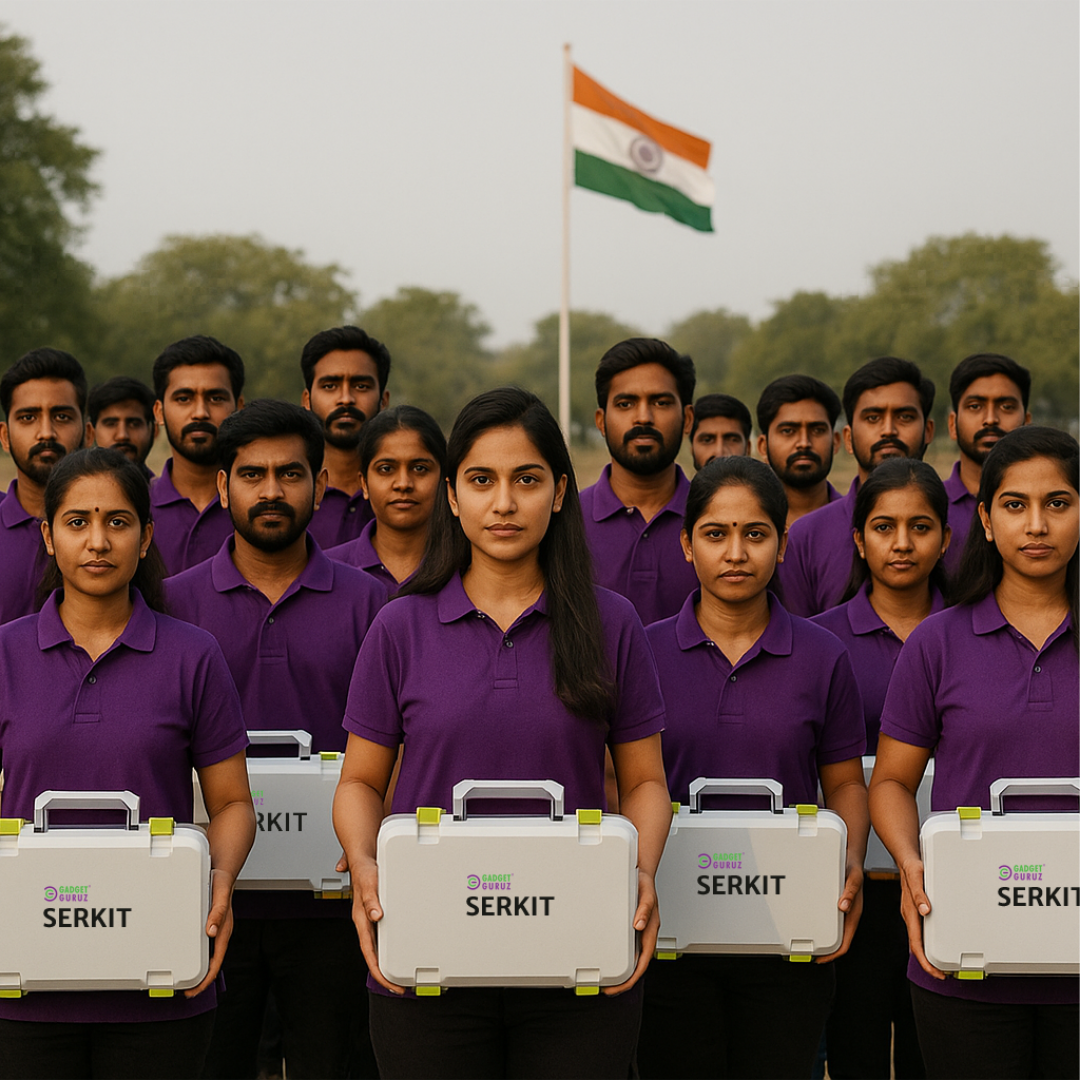
Walk into almost any electronics repair shop in India, and you'll notice one thing immediately: it's almost always run by men. From mobile repair counters to laptop service centres to small neighbourhood shops, the industry has historically been shaped by male technicians, informal apprenticeships, and unstructured learning environments.
For women, the barriers to entry have been steep—social expectations, lack of safe training spaces, scattered tools, and the perception that "electronics repair is not for women."
But the landscape is shifting. And a major catalyst in that shift is SERKIT. SERKIT is not just a smart portable workstation—it is a tool of inclusion, dignity, and opportunity. By redesigning how repairs are carried out, it is also redesigning who gets to be part of this ecosystem.
A Profession Reimagined: From Chaos to Confidence
Traditional repair setups are cluttered, unorganized, and intimidating, especially for beginners. Women entering ITIs, polytechnics, and skilling institutes often find it hard to visualize themselves working in noisy, cramped, male-dominated workshops.
SERKIT changes the environment entirely.
With its:
- • Portable, compact workstation
- • Organized tool compartments
- • Guided workflows and SOPs
- • Smart diagnostics
- • Safe, clean, and professional design
SERKIT transforms repair from a messy, shop-floor activity into a structured, sophisticated, tech-enabled profession.
"For the first time, women can see themselves thriving in this space—not as exceptions, but as equals."
Making Electronics Repair Accessible to Women Everywhere
SERKIT's biggest advantage is that it creates the workspace, wherever you are.
Women can now repair devices:
- • From home
- • In community tech hubs
- • Inside campuses
- • In shared studios or labs
- • During field visits with portability and safety
- • As part of SHG or micro-entrepreneurship groups
When the infrastructure becomes portable, the possibilities become limitless. It eliminates the need for a shop, a bench, or a repair room—things that often acted as social and financial barriers for women.
Creating an Inclusive Workforce the Industry Has Always Needed
India's electronics demand is growing exponentially. With millions of devices entering the market every year, the repair and refurbishing sector is facing a critical technician shortage.
By enabling more women to enter the field, SERKIT directly contributes to:
- • A larger, more skilled workforce
- • Higher repair capacity across urban and rural regions
- • Increased reliability and professionalism in service delivery
- • Greater diversity in the talent pool
Women aren't just filling a gap—they're elevating the standard of the entire industry.
From Trainee to Technician to Micro-Entrepreneur
SERKIT empowers women at every stage:
1. As Students
SERKIT-enabled training labs give women safe, structured access to hands-on learning. They train with real tools and modern workflows, building competence and confidence.
2. As Technicians
With guided diagnostics, checklists, and QC workflows, technicians—regardless of gender—can perform complex repairs with consistency and ease.
3. As Micro-entrepreneurs
A woman with one SERKIT unit can run her own doorstep repair service, corporate repair booth, campus kiosk, or community electronics clinic. She can earn on her terms, without depending on shop owners or male-dominated workplaces. This is how SERKIT is turning skill into economic independence.
An Industry Transformed Through Inclusion
The electronics repair ecosystem is evolving—from unorganized and informal to structured, data-driven, and opportunity-rich.
SERKIT accelerates this shift by making the profession:
- • More accessible
- • More professional
- • More dignified
- • More inclusive
By bringing more women into the workforce, SERKIT doesn't just create employment—it helps build the organized technician ecosystem that India's growing digital economy requires.
Empowering Women, Strengthening the Industry
SERKIT stands at the intersection of technology and social impact. It empowers women to enter and excel in a field where they have been historically absent. It expands the technician base that India urgently needs.
And it transforms electronics repair into a profession defined by skill, dignity, and opportunity—not by gender.
This isn't just innovation. It's inclusion.
And it's the future of India's electronics repair industry.